
Hair Transplant Recovery in Turkey: A Week-by-Week Timeline
A realistic week-by-week look at hair transplant recovery in Turkey — from the first 72 hours in Istanbul to the 12-month result, including the shedding phase nobody warns you about.
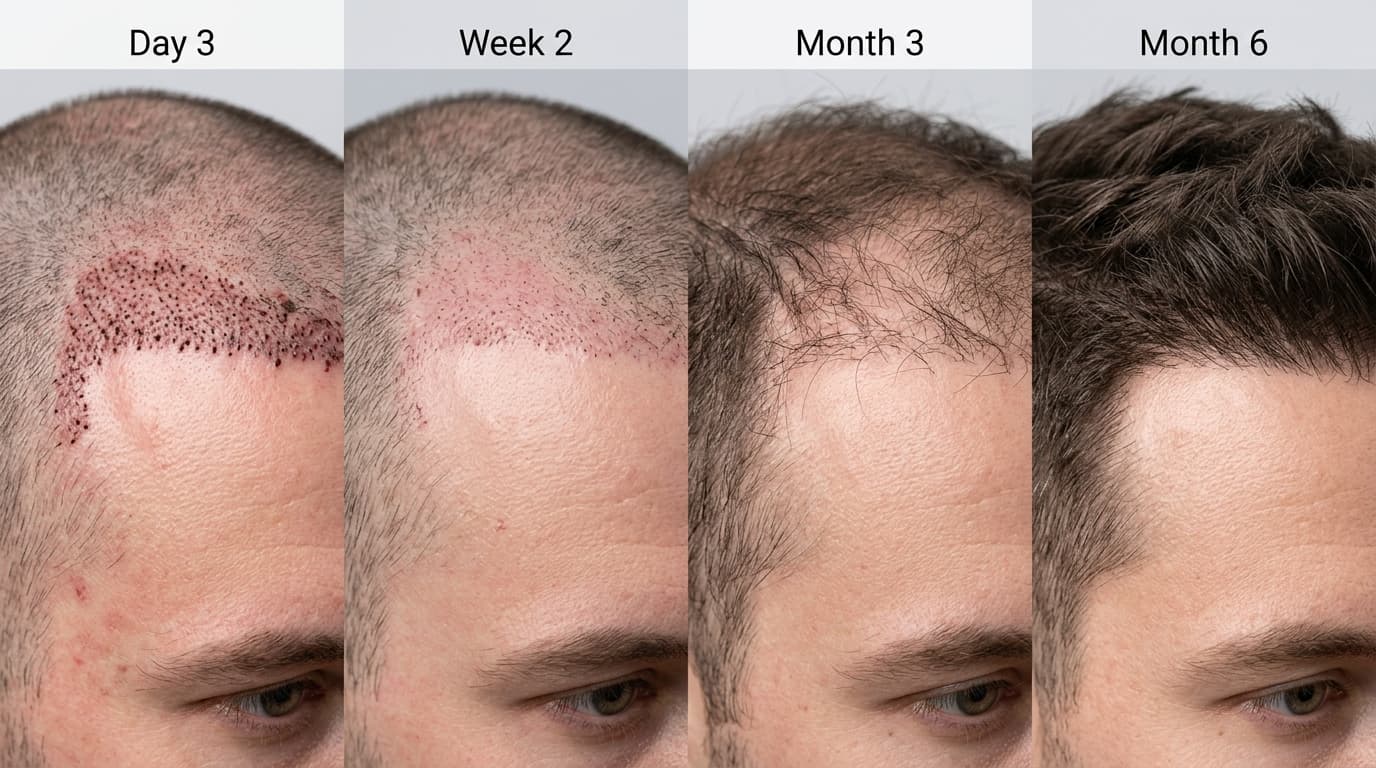
Most patients research the technique and the price before they book. Fewer people ask what the weeks afterwards actually look like — and that gap is where most of the anxiety comes from.
Once someone has compared FUE and DHI, checked the likely cost of a hair transplant in Turkey, and settled on a graft count, the questions usually stop. Then the procedure happens, and a new set of questions shows up — is this swelling normal, why is my hair falling out three weeks later, when does it actually start looking like something. Here's what recovery genuinely looks like, stage by stage, rather than the tidy "two weeks and you're done" version some clinics lead with.
Days 1–3: still in Istanbul
Swelling tends to peak around day two or three, sometimes moving down towards the forehead and eyes before it settles — this looks worse than it feels. Most clinics keep patients in Istanbul through this window so the first wash, done by clinic staff rather than at home, happens under supervision. Sleeping slightly elevated for the first few nights helps keep the swelling down. The donor area is usually more uncomfortable than the recipient area at this stage.
Days 4–7: flying home
Whether you're cleared to fly by day three or day five depends on the clinic's own protocol, not a universal rule — it's worth asking this before you book rather than after. Scabs start forming around now, and the itching that comes with them is the part patients find hardest to leave alone. A saline spray, not scratching, is the standard advice. Most clinics send patients home with a loose, clinic-approved hat rather than a normal cap, since anything tight can dislodge grafts that haven't fully settled.
Week 2: the scabs come off
By day 10 to 14, most of the scabbing has flaked away on its own, and the grafts are secure enough that normal washing and light contact are fine again. Redness fades but doesn't disappear completely — many patients are comfortable going back to an office environment around this point, hat optional depending on how visible they're happy to be.
Weeks 3–6: shock loss (the part nobody warns you about)
This is the stage that catches people off guard. The newly transplanted hairs often shed around week three or four — and it looks exactly like the procedure has failed. It hasn't. The follicle itself stays alive under the skin; what's shedding is just the hair shaft that came with it. This is normal, expected, and near-universal. It's also, understandably, the point where patients message their clinic in a panic — worth knowing in advance so it doesn't feel like a crisis when it happens.
Months 3–4: the quiet phase
Little changes visibly here, which is its own kind of frustrating. Underneath, the follicles are resetting and beginning to regenerate. This is the stretch where patience matters most, and where before-and-after photos taken too early do patients a disservice.
Months 4–12: growth and thickening
New growth typically starts becoming visible from month three or four onward, then gradually thickens and fills in through month eight to twelve. The texture and density most people associate with a "finished" result usually isn't fully there until close to the twelve-month mark — which is worth remembering when a clinic's marketing leans heavily on six-month photos.
Questions worth asking before you book
What does the aftercare protocol actually include once I'm back in the UK — is there a remote check-in, or is it a one-off leaflet?
How many nights in Istanbul does your recovery protocol require before flying is considered safe?
Can I see twelve-month results for patients with a similar hair loss pattern to mine, not just three- or six-month photos?
Want a recovery timeline mapped to your own case and travel dates? Speak to the Bintez team for a free, no-obligation consultation.
Related Treatments

Hair Transplant
Permanent hair restoration solutions using advanced transplant techniques. FUT and FUE options available.

PRP Treatment
Natural hair loss solution using your own blood plasma. Quick, non-surgical procedure with minimal recovery time.
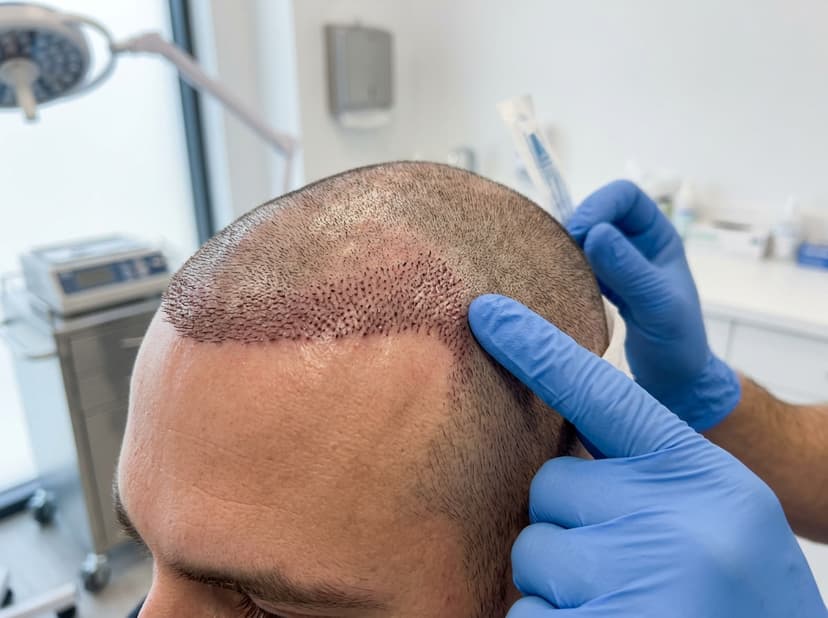
FUE Hair Transplant
Advanced follicular unit extraction technique for natural-looking hair restoration with minimal downtime.
Related Articles
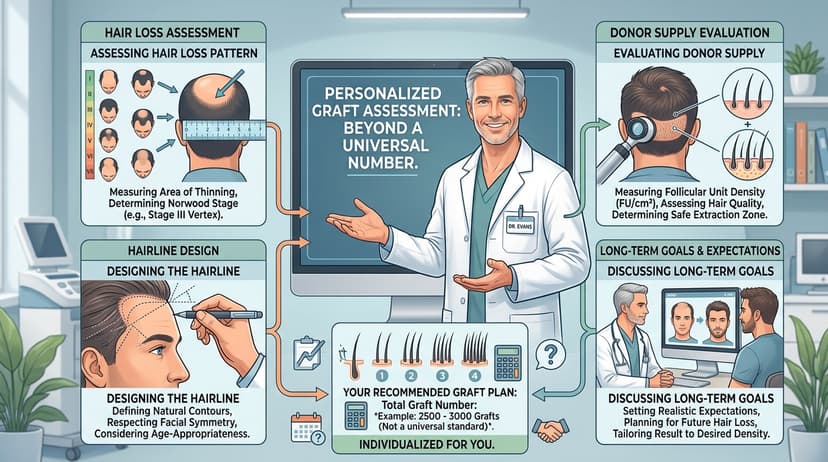
Hair Transplant Turkey: How Many Grafts Do You Really Need?
There is no universal graft number for a hair transplant. Here's how doctors assess your hair loss, donor supply, hairline and long-term goals before deciding how many grafts you actually need.

Hair Transplant Turkey Cost: What UK Patients Really Pay in 2026
UK clinics often charge by the graft. Turkish clinics usually quote an all-inclusive package. Here's how the real numbers compare.
Hair Transplant in Turkey: FUE vs DHI Explained
The two techniques you'll see mentioned most often — FUE and DHI — differ in more than just the acronym. Here's what actually separates them.